| Size | Roughly half the size of Earth's Moon |
| Orbit | Established a stable orbit around Earth |
| Effects | Dramatic changes in tides and weather patterns • Widespread social unrest due to superstitious fears and pseudoscientific theories |
| Location | |
| Appearance | 1888 |
| Significance | Led to increased international cooperation and new understanding of astronomy and celestial mechanics • Profound long-term impacts on the course of space exploration and Earth science |
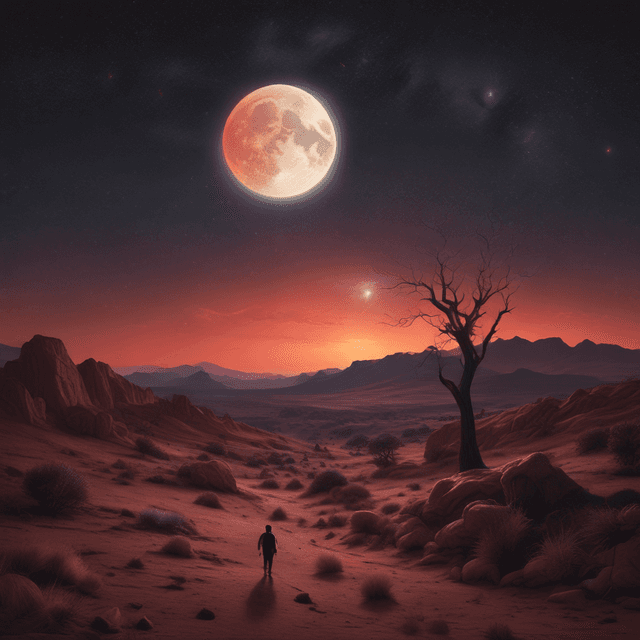
On the evening of June 8th, 1888, residents of Melbourne, Australia and the surrounding regions were stunned to witness the sudden appearance of a second celestial body in the night sky. This previously unknown moon, roughly half the diameter of Earth's own natural satellite, quickly established a stable and predictable orbit around the planet at a distance of approximately 400,000 kilometers.
News of the "Second Moon," as it came to be known, spread rapidly around the world, sparking a frenzy of scientific inquiry and wild speculation. The unexpected celestial event was observed by astronomers globally, but none could initially explain its origins or nature.
Some proposed that the moon had been "captured" by Earth's gravity, breaking off from a larger planetary body elsewhere in the solar system. Others theorized it was a previously undiscovered natural satellite that had simply gone unnoticed. Meanwhile, some religious and pseudoscientific groups claimed the Second Moon was a harbinger of the apocalypse or proof of alien visitation.
As the Second Moon settled into its orbit over the following months, its effects on Earth's natural systems became increasingly apparent and disruptive. Tidal patterns were dramatically altered, with higher highs and lower lows disrupting shipping, fishing, and coastal communities. Weather patterns also seemed to shift, with changes in atmospheric pressure, precipitation, and temperature that confounded meteorologists.
Biologists noted strange effects on animal migration and breeding cycles, while botanists documented changes in plant growth and flowering times. Collectively, these disruptions to ecology and natural cycles caused significant social and economic upheaval around the world.
Facing these widespread impacts, governments and scientific institutions around the world initiated a collaborative effort to better understand the Second Moon and its interplanetary implications. Astronomers conducted detailed observations, while physicists and mathematicians worked to model the celestial body's orbit and mass.
Debates raged over how to respond, with some advocating for an ambitious space program to investigate the moon up close, while others warned against potentially provoking an unknown celestial threat. Ultimately, the need for collective action won out, leading to the founding of the International Astronomical Union (IAU) in 1893 to coordinate global research and policy.
The appearance of the Second Moon had profound and lasting effects on the course of scientific knowledge and space exploration. The IAU's work helped establish a new era of international scientific cooperation, setting important precedents for future space law and planetary protection efforts.
Studying the Second Moon's origins, composition, and effects on Earth's systems drove rapid advances in fields like celestial mechanics, geophysics, and exoplanetology. This accelerated understanding of planetary formation and dynamics, paving the way for humanity's eventual journeys to the Moon and Mars.
While the Second Moon remains a source of ongoing fascination and research, its initial disruption to life on Earth is now viewed as a pivotal moment that forced humanity to confront its place in the cosmos. The event fundamentally reshaped perspectives on our planet's relationship to the wider solar system and universe, with lasting impacts on science, culture, and the ultimate direction of human civilization.
